
01/17/2026
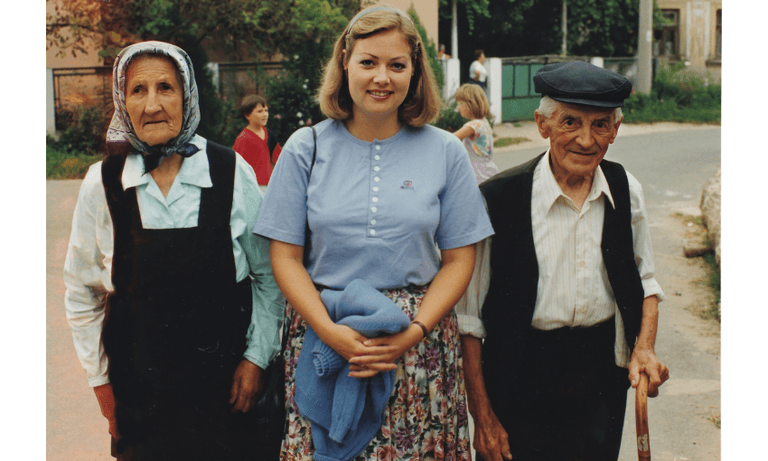
We weren’t supposed to arrive in Kotoriba by taxi. Dad’s uncle and aunt were ready to greet us at the train station – which, for the village, is proudly the oldest in present-day Croatia – only our connecting train from Lake Balaton, Hungary, didn’t show up. We waited for hours until the man at the desk shrugged for the last time as if to say, “maybe tomorrow.” Visiting Kotoriba was the reason for our five-week holiday to Central and Eastern Europe. Dad was finally taking me and my older brother Petar to our grandparents’ village, the place they left for good in 1957. The alluvial plain of Međimurje county, northern Croatia, holds rich soil that gave the Slavs reason to settle there in the Early Middle Ages. There are endless fields of wheat and maize crops between two rivers, the Mur to the north, which serves as Croatia’s border with Hungary, and the Drava, to the south. The area is known for its willow trees, which are stripped, dried and then woven by the region’s basket-makers. A village of around 3000 people, Kotoriba’s not on the way to anywhere. The streets are lined with squat white houses with tile roofs faded by the sun. Years later, after writing a book about my grandparents’ escape, I realised how little I understood about this place. Everyone was staring as we hurried to the home of our stric and strina, my great-uncle and aunt. Dad knew the address from his visits before – the first time as a young man in 1980 (the first of his siblings to see the village), in 1982–83 on an extended OE, then again in 1989, when he brought my mother. He hadn’t spoken Croatian since. I’d never heard him speak it growing up, not even to my grandparents in Auckland who spoke English with thick accents and broken pieces of archaic vernacular from their youth. And yet, when Stric and Strina welcomed us at the door, Dad became that man of the past. The man I’d only seen in photos with dark hair and a moustache, who could have been a Cold War spy. There he was, speaking the village language, making jokes, as if he’d never left. They teased Dad for still using the old-fashioned vernacular of 1950s Kotoriba. With our grandparents living so far away, the language they disappeared with and passed on to their children had been frozen in time. We spent most of the week touring the homes of distant aunts, uncles, and cousins, with Dad having to translate. Each household brought out the same stews of pork or chicken they’d killed themselves, and homemade beer and wine. In the mornings, I woke to stovetop coffee whistling from the kitchen. With it came a shot of rakija, a homemade fruit spirit, which Strina claimed was the only way to clear the throat and start the day. She was a lively old woman, chattering to us in Croatian with no concern about being understood. Stric looked a lot like his brother, my grandfather. Apparently Stric had been the taller of the two, though a botched surgery had left him with a permanent hunchback as he hobbled around with a cane. Since that visit to the village as an 18-year-old, I’ve felt a part of me was missing. Why did we not know more about this side of our heritage from the other side of the world, and why were we so ill-equipped to relate to it when we arrived? In the years after that trip, I tried to embrace aspects of my Croatian heritage. I changed my surname by deed poll from Gregec (Dad’s anglicised version), to Grgec, the original Croatian spelling. I closely followed Croatian football. I bought a special pan for palačinke, Croatian crepes – Dad’s specialty, though I’ve never mastered how to keep the petal-thin mixture from sticking. After sourcing my grandparents’ original birth certificates and getting countless forms officially translated, I became a Croatian citizen. Petar and I were sworn in at a ceremony at the Croatian Club in Wellington. The club is often busy at the weekends with language events and cooking classes. The wooden floors are worn from decades of folk dancing. But there were only four of us that Monday night: me, Petar, Issey, my wife, and Marija, the consular official from the Croatian Embassy in Canberra. To conclude proceedings, Marija played from her phone a tinny instrumental of the national anthem, Lijepa Naša Domovino, “Our Beautiful Homeland”. Petar and I could only stand there pretending to move our mouths, our mumbling barely audible in the empty hall. Why did Dad’s side of the family never encourage our Croatian identity growing up? While Majka and Deda bickered in their own peculiar language and sent birthday cards with messages like “we hope you spend a nice day”, it never occurred to me that they were any different from anyone else’s grandparents. It wasn’t until visiting Kotoriba – and experiencing the dumb frustration of not being able to converse with my relations – that I wished we’d been encouraged to learn the language. If only Majka and Deda had told us more about their lives in Yugoslavia. If only we knew about the